Structured Cabling

Structured cabling, built to the standard

Structured cabling is the physical backbone underneath every network — the organized system of pathways, cable, and connection points that carries data, video, and voice through a building. We design and pull that system to ANSI/TIA-568, so whatever you plug in on day one (or day one thousand) just works.

This is the discipline behind every project we run — single-family pre-wires, multi-unit builds, and commercial fit-outs alike. The property changes; the standard doesn't.
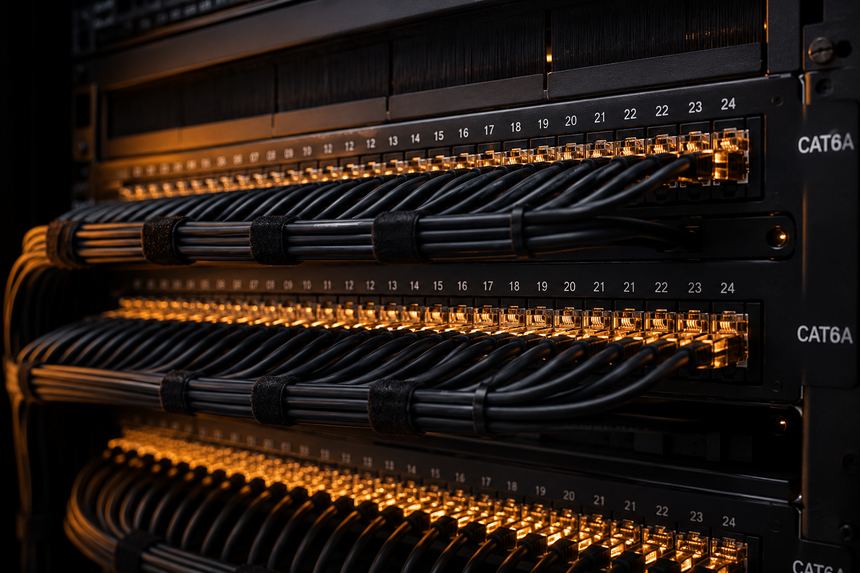
CAT6A patch panels with amber-lit cable management in a network rack
How It's Built

Pathways, panels & cable — the anatomy of a structured system

Every job is broken into the same three zones, whether it's one house or one hundred units.

  • Work area — the wall jack or faceplate where a device connects
  • Horizontal cabling — the run from that jack back to a central patch panel, capped at 100 m per TIA-568
  • Telecom room / backbone — where every run lands, gets patched, and connects up to the ISP or a building-wide riser
  • Cat5e, Cat6, Cat6A, Cat7, coax, and fiber — pulled to the media the job calls for, not a one-size-fits-all default
  • Pulling technique that protects performance: correct bend radius, pulling tension kept under the jacket's rated limit, and separation from electrical lines and other EMI sources
  • Conduit or ENT sleeving where a run needs future-pull flexibility or physical protection
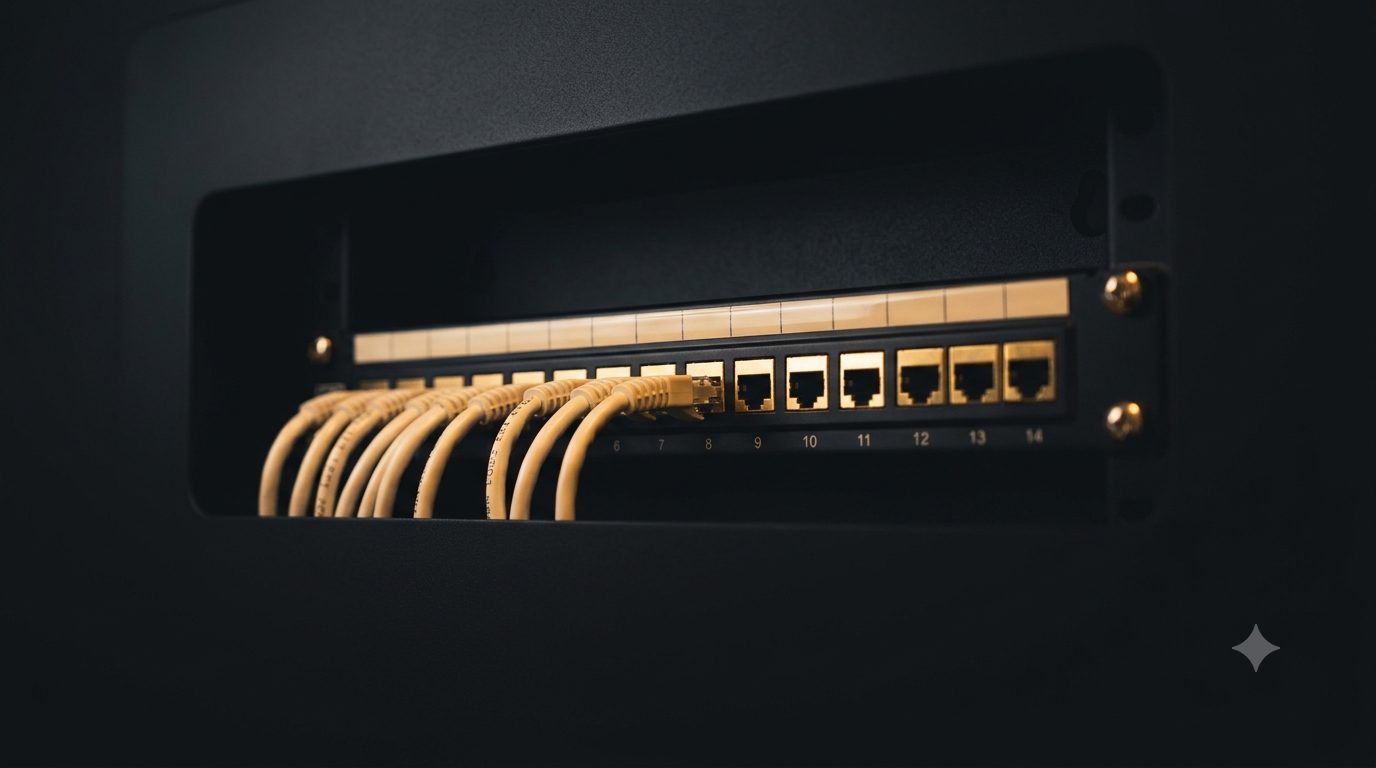
Close-up of a terminated and labelled patch panel
Pricing

Per-drop rate by property type

All prices CAD, labour + OpticPulse-supplied Cat6A solid-copper cable, termination & certified test. Build an exact estimate for your project on the pricing page.

Single-Family

from $195 CAD / drop

Pre-wire rate for a home, cable + termination + certified test included.

Multi-Unit

from $185 CAD / drop

Per-unit rate for condos, townhomes & apartment builds.

Commercial

from $225 CAD / drop

Office, retail & mixed-use structured cabling.

Full Pricing & Instant Estimate
Common Questions

Structured cabling questions

A few questions specific to this discipline.

Cat5e is older and largely obsolete for new installs. Cat6 is a solid, cost-effective default for most runs today. Cat6A costs a bit more but future-proofs you for 10 Gbps speeds and performs better over longer runs — we'll recommend the right fit during the quote.

Horizontal cabling runs from a wall jack out to the telecom room or closet — capped at 100 metres by the standard. Backbone cabling connects telecom rooms to each other, or a building to its main entrance point, and can run much longer, especially over fiber.

Yes — routing, bend radius, pulling tension, and separation from electrical/EMI sources are all held to TIA-568. It's the difference between cable that just fits in a wall and cable that performs at its rated speed for the life of the building.

Yes — most projects mix media: Cat6A for data and cameras, coax for legacy TV points, and fiber for an ISP backbone or inter-building link. We plan pathways so all three share conduit and closet space cleanly.

See all frequently asked questions →

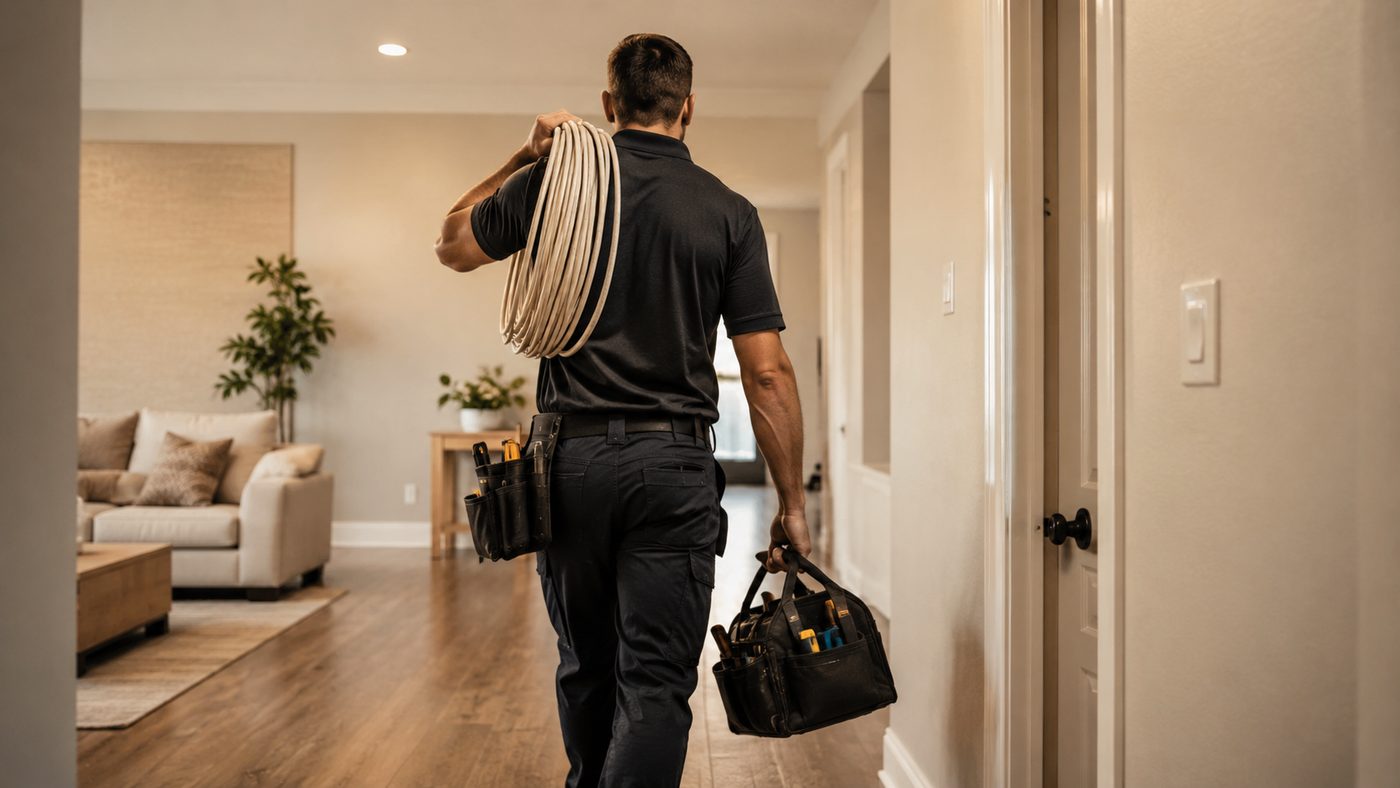
OpticPulse technician arriving on site with a cable coil and tool bag

Booking structured cabling projects across Niagara.

Send your blueprint, drop count, or a few photos. We'll confirm a site visit and a clear quote in CAD — we supply the cabling, you supply the devices, we install.